
What We Need To Know
Hydrocodone vs Oxycodone Strength
Aug
Hydrocodone vs Oxycodone Strength: Which One Is Actually Stronger?
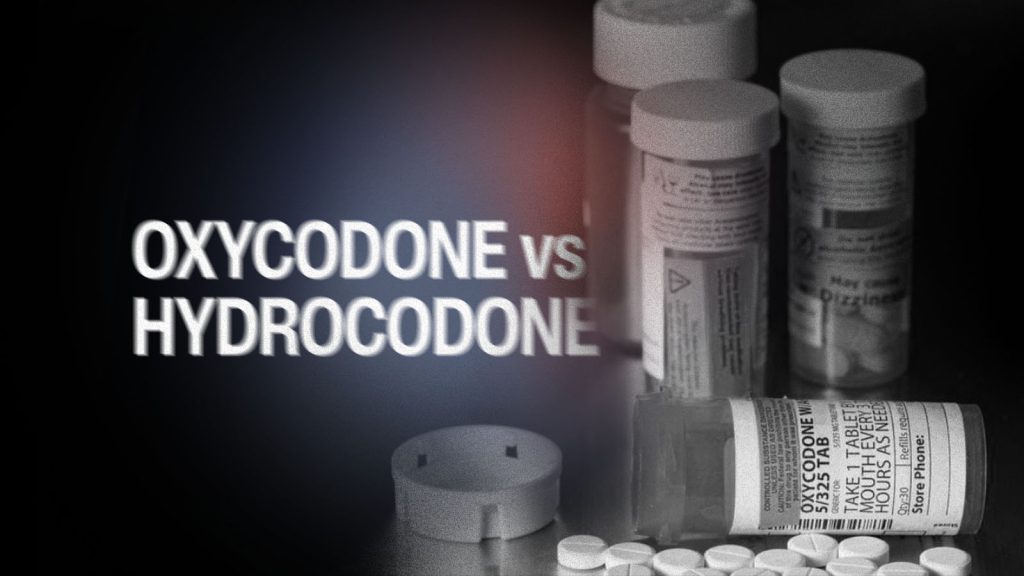
If a doctor has ever handed you a prescription for Norco, Vicodin, or Percocet, you’ve probably wondered how it stacks up against a different opioid painkiller. Hydrocodone and oxycodone are two of the most commonly prescribed opioids in the United States, and they get lumped together in everyday conversation constantly. But they are not interchangeable, and they are not equal in strength. Hydrocodone vs Oxycodone Strength
This guide breaks down exactly how hydrocodone and oxycodone compare — potency, onset, formulations, side effects, addiction risk, and the safety considerations that matter more than “which one is stronger.”
The Short Answer: Oxycodone Is Stronger
Oxycodone is generally considered about 1.5 times more potent than hydrocodone on a milligram-for-milligram basis. In practical terms, that means roughly 5 mg of oxycodone provides pain relief comparable to about 7.5 mg of hydrocodone. Some sources put the gap slightly wider, in the 1.5x–2x range, depending on the individual and the type of pain being treated.
Oxycodone also tends to kick in faster — noticeable effects in about 10 to 15 minutes, compared to 20 to 30 minutes for hydrocodone — although the two drugs have a broadly similar duration of action for immediate-release formulations, typically 4 to 6 hours.
That’s the headline number. But “stronger” doesn’t automatically mean “better,” and the full picture involves more than a potency ratio.
What Are Hydrocodone and Oxycodone, Exactly?
Both drugs are semi-synthetic opioids, meaning they’re chemically derived in a lab from compounds found in the opium poppy (specifically thebaine), rather than being pure plant extracts like morphine or fully synthetic like fentanyl. Structurally, they’re extremely close cousins — oxycodone simply has an extra oxygen atom compared to hydrocodone. That small molecular difference changes how strongly each drug binds to opioid receptors and how it moves through the body, which is where the potency gap comes from.
Both drugs work the same basic way: they bind to mu-opioid receptors in the brain and spinal cord, blocking the transmission of pain signals and altering how the brain perceives and responds to pain. That same receptor activity is also responsible for the euphoric effects that make opioids prone to misuse.
Potency in Context: Morphine Milligram Equivalents (MME)
Doctors and pharmacists don’t just compare hydrocodone and oxycodone to each other — they compare all opioids using a standardized scale called Morphine Milligram Equivalents (MME). This lets prescribers convert between different opioids safely and track a patient’s total daily opioid exposure.
- Hydrocodone has an MME conversion factor of 1, meaning 1 mg of hydrocodone equals 1 MME.
- Oxycodone has a higher conversion factor, reflecting its greater potency per milligram.
This system is also why switching between opioids is never something to do on your own. Miscalculating an equivalent dose when moving from one opioid to another is a well-documented cause of accidental overdose, which is why conversions are handled by a physician using established clinical guidelines.
Formulations: How Each Drug Is Typically Prescribed
| Hydrocodone | Oxycodone | |
|---|---|---|
| Common combination products | Norco, Vicodin (with acetaminophen) | Percocet (with acetaminophen) |
| Standalone products | Less common in the U.S. | OxyContin (extended-release), Roxicodone (immediate-release) |
| Relative potency | Baseline | ~1.5x stronger |
| Onset of action | 20–30 minutes | 10–15 minutes |
| Typical duration (immediate-release) | 4–6 hours | 4–6 hours |
| DEA schedule | Schedule II | Schedule II |
One structural difference worth noting: hydrocodone is almost always sold combined with acetaminophen in the U.S., while oxycodone is available both combined with acetaminophen (Percocet) and on its own (OxyContin, Roxicodone). That distinction matters for dosing, because acetaminophen has its own upper safety limit tied to liver health, separate from the opioid component. When a hydrocodone or oxycodone product includes acetaminophen, the acetaminophen ceiling — not the opioid — often becomes the practical limit on how much can be taken in a day.
It’s also worth knowing that hydrocodone wasn’t always classified the same way as oxycodone. Until 2014, hydrocodone combination products were Schedule III; the DEA moved them to the stricter Schedule II specifically because of rising concerns about misuse. Today, both drugs sit in the same regulatory category.
Side Effects: How They Compare
Because hydrocodone and oxycodone act on the same receptors, their side effect profiles overlap heavily. Common effects reported with both include:
- Drowsiness or sedation
- Constipation (a near-universal opioid side effect, caused by slowed gut motility)
- Nausea and vomiting, especially early in treatment
- Dizziness or lightheadedness
- Itching
- Dry mouth
Oxycodone is somewhat more frequently associated with dizziness and a more pronounced sense of euphoria, which ties back to its faster onset and higher potency. Hydrocodone is sometimes described as having a marginally milder side effect profile at equivalent therapeutic doses, though this varies significantly from person to person based on metabolism, other medications, and individual sensitivity.
The most serious shared risk with both drugs is respiratory depression — slowed or shallow breathing that can become life-threatening, particularly when opioids are combined with alcohol, benzodiazepines, or other sedatives. This risk is present with both drugs at high doses and is the primary mechanism behind opioid overdose deaths.
Addiction and Abuse Potential
Both hydrocodone and oxycodone are Schedule II controlled substances, the DEA’s classification for drugs with a high potential for abuse that can lead to severe psychological or physical dependence. Neither drug is “safe” from a dependence standpoint, even when taken exactly as prescribed for a legitimate medical reason.
That said, several lines of evidence point to oxycodone carrying a somewhat higher abuse liability than hydrocodone:
- A review of multiple clinical studies found oxycodone associated with a higher risk of abuse compared to both oral morphine and hydrocodone.
- Research on subjective drug effects has found oxycodone produces stronger “liking” and euphoria scores among people who misuse opioids, likely connected to its faster onset and higher potency.
- Oxycodone is available in more standalone formulations (not combined with acetaminophen), which historically made it more attractive for misuse since there’s no acetaminophen ceiling limiting how much can be taken.
None of this means hydrocodone is a “safe” alternative. Nationally, a meaningful share of patients prescribed opioids for chronic pain — commonly cited estimates run in the range of 20–30% — end up misusing them to some degree, and roughly 8–12% go on to develop opioid use disorder. That risk applies across opioid types, not just to oxycodone.
Which One Gets Prescribed for What?
In practice, the choice between hydrocodone and oxycodone usually comes down to more than raw potency:
- Pain severity: Oxycodone’s higher potency and faster onset make it a common choice for more intense acute pain — post-surgical recovery, significant injuries, or cancer-related pain.
- Treatment history: If a patient hasn’t gotten adequate relief from hydrocodone, oxycodone may be the next step up rather than simply increasing the hydrocodone dose.
- Chronic vs. acute needs: Extended-release oxycodone (OxyContin) is often used for continuous, around-the-clock chronic pain, while immediate-release formulations of either drug are typically reserved for short-term or breakthrough pain.
- Patient risk factors: A history of substance use disorder, liver disease (relevant to the acetaminophen component), or respiratory conditions can push a prescriber toward one option, a lower dose, or a non-opioid approach entirely.
Current clinical guidance has also shifted meaningfully over the past decade. Research increasingly shows that opioids provide no significant advantage over over-the-counter options like ibuprofen, naproxen, or acetaminophen for many common pain conditions, while carrying substantially higher risks of dependence, constipation, and respiratory depression. That’s part of why opioid prescribing for routine pain has become more conservative industry-wide, with opioids increasingly reserved for pain severe enough that alternatives haven’t worked or aren’t appropriate.
Can You Safely Switch Between Them?
Sometimes, yes — but only under medical supervision. Because oxycodone is more potent, converting from hydrocodone to oxycodone (or the reverse) requires careful dose calculation to avoid either inadequate pain control or accidental overdose. Physicians use established opioid conversion tables and MME calculations to make this switch safely, often starting conservatively and adjusting based on response. This is not something to estimate on your own using online potency ratios — individual metabolism, kidney and liver function, and concurrent medications all affect how a given dose will actually feel.
How the Body Processes Each Drug | Hydrocodone vs Oxycodone Strength
Pharmacokinetics — how a drug is absorbed, broken down, and cleared — also plays a role in why these two opioids don’t feel identical to every patient.
Hydrocodone is metabolized primarily by the liver enzyme CYP2D6, which converts it into hydromorphone, a much more potent opioid, as one of its active metabolites. The catch is that CYP2D6 activity varies widely between individuals due to genetics — some people are “poor metabolizers” who convert very little hydrocodone into its active form, which can make the drug feel less effective for them even at a normal dose. Others are “ultra-rapid metabolizers” who convert more of it, increasing their sensitivity to side effects.
Oxycodone is metabolized mainly through a different pathway (CYP3A4, with a smaller CYP2D6 contribution), and its primary effects come from the parent compound itself rather than depending heavily on conversion to an active metabolite. This makes oxycodone’s effects somewhat more predictable across different patients, since it’s less dependent on an individual’s CYP2D6 genetics.
This genetic variability is one reason two patients can be prescribed the same dose of hydrocodone and report very different levels of pain relief — and it’s part of why a prescriber might switch a patient to oxycodone if hydrocodone isn’t working as expected, independent of the general potency difference between the two drugs.
A Brief Note on History and Regulation | Hydrocodone vs Oxycodone Strength
Hydrocodone has been available in the U.S. since the 1940s, most familiarly as the opioid component in Vicodin. Oxycodone has an even longer history, first synthesized in Germany in 1916 and later becoming widely known through OxyContin, introduced in 1996.
OxyContin in particular became central to the U.S. opioid crisis in the late 1990s and 2000s, following aggressive marketing that downplayed its addiction risk. That history is part of why oxycodone products, and extended-release opioids generally, have faced heightened regulatory scrutiny, reformulation into abuse-deterrent formats, and stricter prescribing guidelines over the past two decades. Research shows that a large share of people who misused abuse-deterrent OxyContin after its 2010 reformulation simply switched to other available opioids, including generic extended-release oxycodone, underscoring that formulation changes alone don’t eliminate misuse risk tied to an entire drug class.
Both drugs remain widely prescribed today, but prescribing volumes for opioids generally have declined substantially since their peak in the mid-2010s, as clinical guidelines have shifted toward more conservative use and greater emphasis on non-opioid alternatives where appropriate.
Practical Takeaways | Hydrocodone vs Oxycodone Strength
If you’re comparing these two medications because you or someone you care about has been prescribed one of them, a few practical points are worth keeping in mind:
- Potency isn’t the whole story. A “stronger” opioid isn’t automatically the right choice — pain type, individual response, and risk factors matter more.
- Never adjust your own dose based on a potency ratio. The 1.5x figure is a general guideline, not a precise conversion for your body. Dose changes and switches between opioids should go through your prescriber.
- Watch the acetaminophen, not just the opioid. If your medication is a combination product, track your total daily acetaminophen intake across everything you’re taking, including over-the-counter products, to avoid exceeding the safe daily limit.
- Don’t combine with alcohol or sedatives. This is the single biggest modifiable risk factor for the respiratory depression that makes opioid overdose fatal.
- Use the lowest effective dose for the shortest necessary time. This is now standard guidance across nearly all major prescribing bodies for both drugs.
Frequently Asked Questions | Hydrocodone vs Oxycodone Strength
Is 5 mg of oxycodone the same as 5 mg of hydrocodone? No. Because oxycodone is roughly 1.5 times more potent, 5 mg of oxycodone produces a stronger effect than 5 mg of hydrocodone. Equivalent pain relief from hydrocodone would require closer to 7.5 mg.
Is Percocet stronger than Norco? Percocet contains oxycodone and Norco contains hydrocodone, so on a milligram basis, yes — Percocet’s opioid component is generally more potent. Actual strength also depends on the specific dose of each tablet, since both come in multiple strengths.
Does stronger mean more dangerous? Higher potency generally does correlate with higher overdose risk if doses aren’t adjusted properly, and oxycodone does show a somewhat higher abuse liability in research. But both drugs carry serious risks of dependence and respiratory depression, and “less potent” is not the same as “low risk.”
Why do hydrocodone and oxycodone products often contain acetaminophen? Combining an opioid with acetaminophen (or another non-opioid analgesic) can improve pain relief and, in theory, discourage taking excessive amounts of the opioid, since acetaminophen has its own toxicity ceiling. The tradeoff is a real risk of liver damage if the acetaminophen limit is exceeded, which becomes more likely if someone takes extra tablets or combines the medication with alcohol.
Which one should I take? That’s a decision for you and your prescriber, based on your specific pain, medical history, and risk factors — not something to determine from a potency comparison alone.
Oxycodone edges out hydrocodone in raw potency, faster onset, and — by most research — a somewhat higher abuse liability. Hydrocodone isn’t automatically the “safer” choice, though; it carries the same fundamental risks of dependence, respiratory depression, and misuse, just at a marginally lower intensity per milligram.
The more useful question isn’t “which drug is stronger” — it’s “what’s the lowest effective dose, for the shortest necessary time, that manages my pain safely.” That’s a conversation to have directly with a doctor or pharmacist, who can weigh your specific situation rather than a general potency ratio.
